Combat first aid
Medical Courses
You can't prepare for an accident, a range injury or a crisis "when it happens". We train you to react automatically: stop massive bleeding, set priorities and act — in civilian life and in tactical environments.
The one skill you won't have time to recall
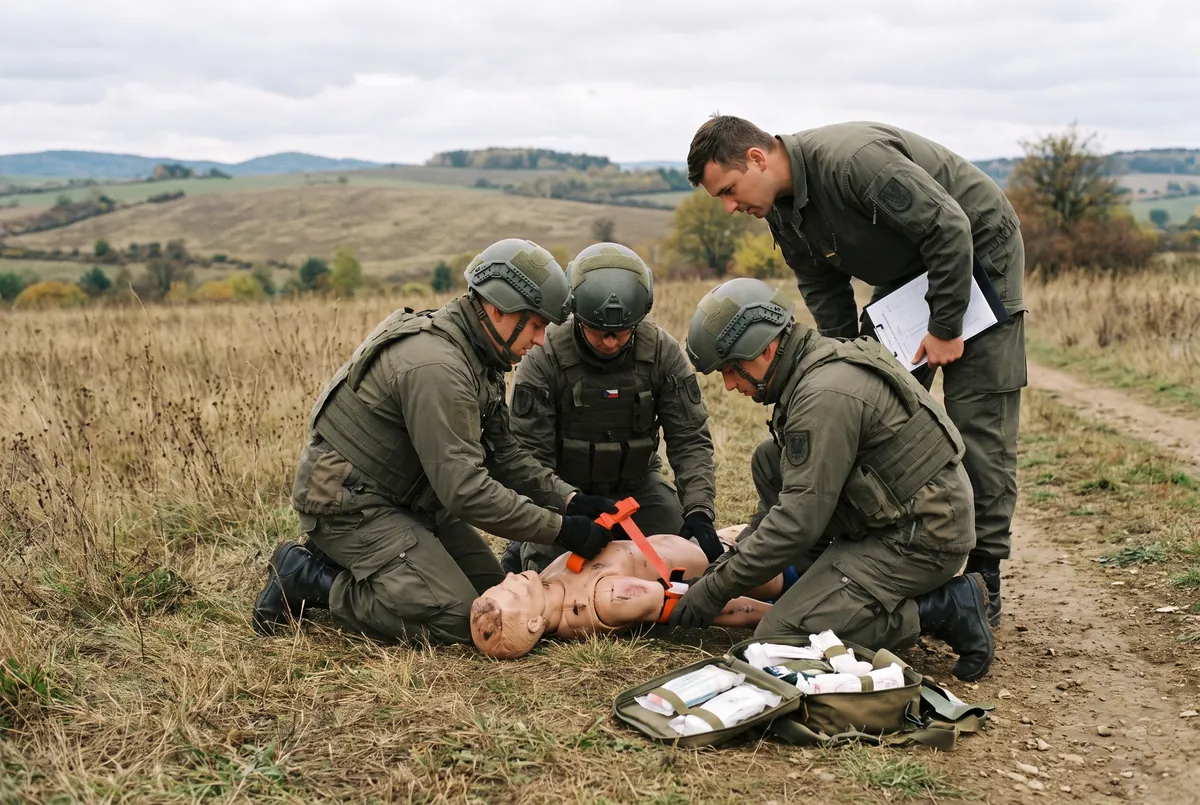
First aid is the one skill in our lineup you'll almost certainly use one day. Our courses draw on tactical medicine — procedures proven where the right decision has to happen in seconds. We train in realistic scenarios, under pressure and with improvised means.
Combat first aid — basic
Fast, effective response to injuries: treatment priorities, stopping massive bleeding (pressure, tourniquet), common civilian injuries as well as more complex trauma in extreme conditions. Realistic scenarios and hands-on practice.
Combat first aid — advanced
For graduates of the basic course: advanced treatment techniques, working with multiple casualties, evacuation and handover to professional medics. Theory plus an intensive practical block.
Who it's for
- Gun owners and range visitors — a shooting injury is exactly the situation where these skills decide
- Hunters, paddlers, mountain hikers and anyone who spends time far from help
- Professionals in the armed and security forces
- Companies — as standalone training or part of a team building event
FAQ
What people ask us
Is the course suitable for complete laypeople?
Yes. The basic course assumes no medical background — you'll learn what matters most: stopping massive bleeding, assessing a casualty and taking action.
How is it different from a regular first aid course?
We train under pressure and in realistic scenarios — including tactical situations, multiple casualties and improvised means. Not just CPR on a classroom carpet.
How much does the course cost and when does it run?
We schedule dates on a rolling basis, and for groups of 6 or more we'll open a private one. Pricing depends on the format — write to info@dstactics.com.
Will I get a certificate?
You'll receive a certificate of attendance after completing the course. The course does not replace accredited medical education.